Friday, October 3, 2014


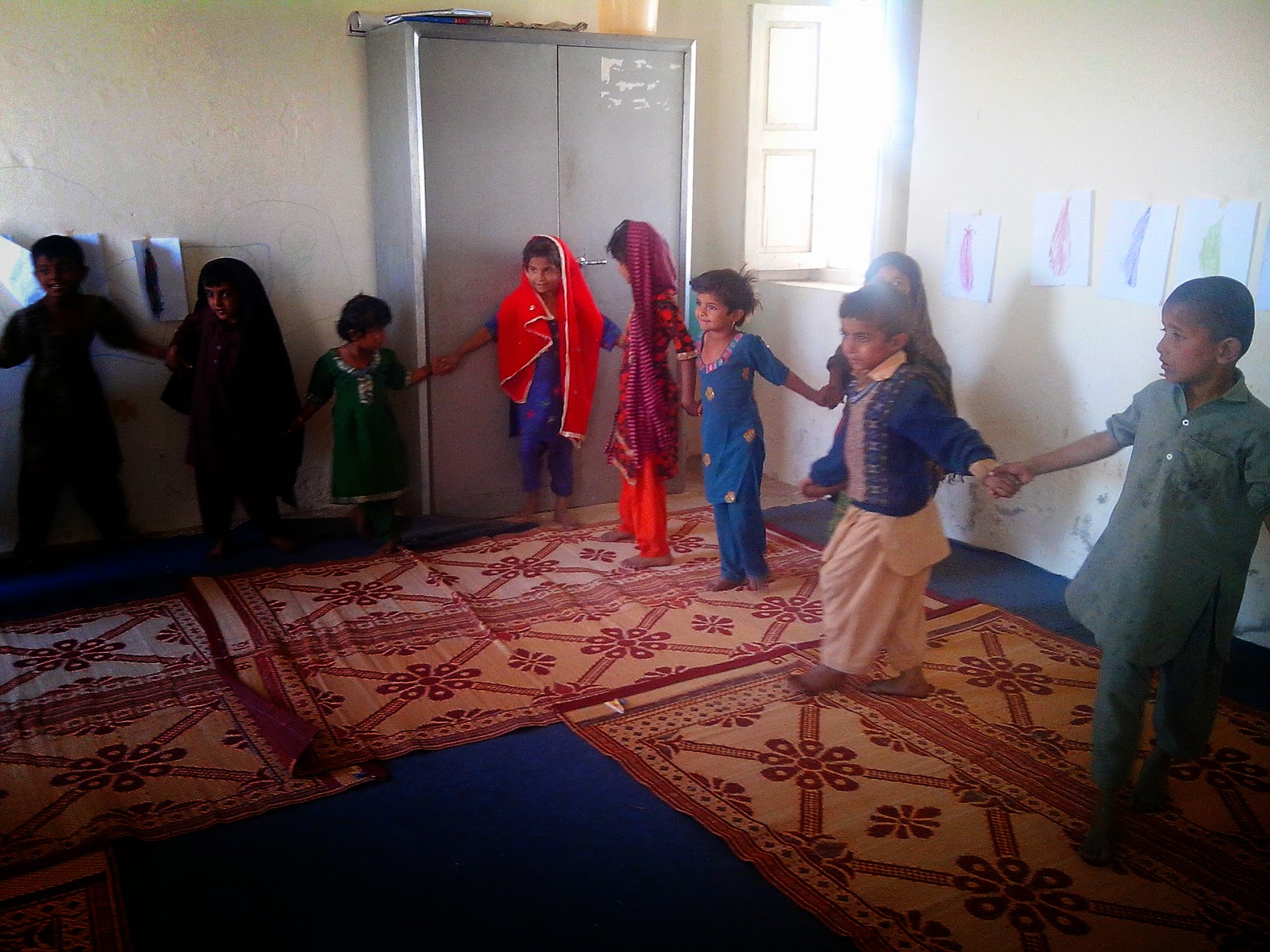
Group Time


Children in their early ages prefer to get individual attention, task and rewards but an effective teacher always minimizes that behavior through strategic teaching. For example stories and group discussion time are the best approach to teach good moral values to children.   Engaging children in stories helps them to enhance their imaginative stills that lead them to differentiate between the good and bad characteristics and they want to apply in their real lives.
Therefore, every teacher and caregiver must try to do the following;
  • Always have a space and time for group time to keep children in circle and tell them stories
  • Generate discussions on what, why and how so children could complete the sequence of the story together that will enhance a positive competition  
  • Make the discussion interactive through open ended questions so children can use their ideas, thoughts and understanding
  • Listen to the children carefully and raise questions and probe accordingly so the flow of their expression to raise their confidence and trust in their abilities

If this happens, it will help children to share and learn from each other. It will also help them to socialize and modify their behavior from self centeredness of people center, which would be a great asset for their personal and social growth. Therefore, every teacher must try group time as a routine for their classroom practice. 

Tuesday, August 26, 2014

  Tea & ECD

A cup of tea is a form of respect, entertainment, sharing of joy, gossips and social courtesy in many cultures.   It generates an environment where people can talk, share experiences, enjoy and learn from each other.  In an Early Childhood Educational setting when mothers sphere sometimes to walk to a center with their children for a workshop or seminar, tea becomes a source of motivation and expectation.   Therefore, it is essential for the organizer to do the following;
·      Organize meaningful activities for children so they can play together and mothers can assist their children
·     Allow discussions and rationalize the activities so mothers can enhance their conceptual understanding or develop awareness  
·         Facilitate discussions so mothers can share their experiences from home
·      Link the discussions with the theories of child development so their experiences and ideas can make a good sense for them
·         Offer a cup of tea for parents at the end of the session so they could feel entertained and express their perception about the activities  
A cup of tea is not a source of entertainment for mother but it also has  a deep meaning. For instance, it relaxes the mothers mentally. Moreover, it allows children to play and have fun while their moms are engaged in taking tea and sharing their ideas. It also helps mothers to feel home that enhances confidence to share their learning and master knew knowledge. 
Keeping in view the above mentioned importance, it seems noteworthy to integrate cultural norms (a cup of tea) with the social context of ECD to make the program more effective.


Thursday, July 31, 2014

Equal Attention

We all believe that children have equal rights, responsibilities, status and opportunities but to understand the symbolic expression of the fact that two quantities are equal. We need to relate this expression with children at school. For example, early childhood education requires attention to maintain the expression in giving an equal opportunity to girls and boys from their critical ages and stages. In order to do that, schools need to keep in mind the following procedures;
·         Plan to give equal attention to boys and girls in the classrooms
·         Distribute and assign tasks equally for group and pair work
·         Ask questions to boys and girls equally
·         Form groups according to gender equality
·         Engage boys and girls for stage performances  
·         Educate parents to give equal attention to their daughters and sons at home
·         Encourage and highlight the importance of equal attention and its long term positive impact on the specific and general society.
So this approach to early childhood education can create equality among children and will increase their self esteem and confidence. It can also create a greater attachment to the teachers and the schools because the equal attention could reflect care, respect, love, attention and justice. If this happens, leading to a peaceful society wouldn’t be a dream for children from their early ages.

Friday, July 4, 2014


Importance of Special Education

Special education is the practice of educating students with special needs in a way that addresses their individual differences and needs. When children inter into a school, a day care center or a children’s resource center, it’s important for the teachers or educators to understand each child’s individual differences and needs.  Special education is viewed only as an education to the severe needs of special children but we need to understand that all the children are special in many ways. Some have minor specialty called developmental delays and few have severe kind of specialty. In order to understand children’s special needs, the school, individuals and institutions need to have the following approach;
·         Develop human capacity of educators, teachers and field support motivators so they can accommodate and support these children
·         The educators, teachers and field support motivators should have a close coordination with parents and communities to enhance awareness of special education
·         Policy makers and institutional leaders must develop a monitoring, support research mechanism for further learning and development
Keeping in view the importance of special education it seems significant to understand special needs of children but for that one needs to increase his/her knowledge, develop skills and moral attitude to educate the special children. When that happens, children’s developmental delays and other special needs can be improved.


Tuesday, May 27, 2014

Social skills

A social skill is the ability to communicate, persuade, and interact with other members of the society, without creating a conflict and disharmony. Children from their early ages need to learn how to communicate effectively with others that could enable them to solve problem and make decisions. Parents, caregivers and teachers need to keep in view the following;
·        Talk to children respectfully so it can enable them to enhance confidence in talking to others
·        Set social rules (take turn, show respect, and talk in a positive tune etc) for home and school to follow but must avoid compromising the rules
·        Allow children to use social skills in making friendships and working together
·        Engage them in interaction so they can express their ideas, perceptions and opinions, that will allow them to express their views in a constructive way
·        Avoid in engaging in their conflicts. Encourage them to communicate, persuade and motivate to resolve conflicts. This will help them to be more independent in differentiating between what to do and what not.
So this reflects that early childhood education is very critical in developing a better social skill among children to generate harmony and tolerated society.

Sunday, May 11, 2014

Early Literacy Development


Early Literacy is what children know about reading and writing before they can actually read or write. Children’s early literacy behaviors occur as they engage in reading and writing related tasks at home, in the community, and at school. Developing knowledge of literacy involves learning how to think about language and how it’s used. Deficiency in knowledge not only leads to difficulty in learning to read but also difficulties in acquiring new knowledge. Higher vocabulary development and listening comprehension has been associated with the greater exposure to story book sharing experiences.
In order to help children parents and care givers might need to do the following;
·         Show illustrations of animals, shapes, people, places and things. Read the names with soft and clear pronunciation. Keep repeating and reinforcing those names in everyday life according to the ages and stages of children
·         Sing nursery rhymes with actions. Allow them to see these rhymes with illustrations on TV or Ipad etc.
·         Show real animals, things and places. Allow children to touch and feel so they can use their own senses. Also allow children to talk to people to help them to develop their social skills
·         Read simple stories or tell stories in simple language so it could help children to enhance their imaginative skills
·         Allow them to grip the pencils, draw illustrations and color that will lead them to early writings
·         Understand, encourage and reinforce their signs of their language literacy so it can sustain their motivation and develop their confidence
Children have a great potential and as parents and care givers, we need to understand or learn about children’s millstones, assist and facilitate according to their early literacy needs.  


Thursday, April 17, 2014

  Volunteerism for ECD

Engaging young minds and dedicated volunteers in an Early Childhood setting is very beneficial because it helps young girls and boys to make important networking contacts. They learn to develop professional understanding, share their learned knowledge, and expertise. It can enrich their resume. They can gain new ideas, make connection and relationships with parents and communities.
As a result, it enhances youth’s self esteem, confidence and more importantly, they learn to be knowledgeable, skillful, productive and positive parents. It further develops their communication and social skills as well as makes them more ambitious, enthusiastic, more caring and loving people in the society.
These are the important characteristics that children at their early ages of life need. Therefore, its noteworthy for our youth (young boys and girls) to volunteer for Early Childhood classes to develop their professional abilities and become skillful teachers and parents to nurture their students and children.

Monday, March 31, 2014

Women Education for Child Development


 Educating a woman is educating a family (Anonymous). This belief leads life in a practical way in human society but when it comes to early years of children’s development, this belief gets stronger. For instance, it’s recognized by the educational and psychological researchers that brain development of children begins from prenatal stage. If this is the case, then the relationship of mother and child development is much stronger emotionally, physically, socially, morally and cognitively in a natural way. On the other hand, the meaningful nurturing process of the child enables a mature personality development, which gradually, helps the child to be remain peaceful and sustain peace in the society. Therefore, women and families might need to consider the following;
·         Be happy and healthy during and after the pregnancy
·         Engage in reading and listening to music to create a positive energy
·         Talk to her child after 4 months of pregnancy because the child starts hearing already
·         Stay emotionally balanced
·         Be loving and love others around her
·       Be friendly, respectful, caring and tolerant towards other human beings because the child learns from the environment.
·   Get education and educate others around her including her own children because education and awareness is the only key to a peaceful society. 

Keeping these in mind, its important to understand that nature and nurture plays their significant roles.  Children learn good or bad, effective or ineffective behavior from their adults. In order, to create a peaceful environment and peaceful society, children from their early ages, which is called sensitive and critical age, needs to be nurtured in a conducive learning environment. Therefore, its necessary for women to play their roles in nurturing their children to strengthen the natural relationships and positive outcomes between them and society.  

Friday, January 3, 2014

Culture, Power and Impact on Child Development


Children from dominant cultural practices are influenced by the beliefs and practices of grandparents. Child development depends on how they treat the children at home? What they belief about the child? How educators can minimize the gaps of child development in a positive and constructive way in that culture.
Some of the culture gives more importance to adults as a mean of respect. They believe children are empty vessels and they will learn gradually when they go to school. Therefore, the more emphasis remains on the physical development of the children so they can grow up faster, go to school and learn new things. These beliefs and respect in these kinds of cultures make the adults, particularly, grandparents powerful. Therefore, changing their beliefs becomes a big challenge for interventionists. However, one strategy from one of the interventions worked very conveniently for us. For instance, when the field staff visited homes and demonstrated teaching young children (birth to three years), it became an interesting experience. Grandparents learned those vocabularies from English language and reinforced them later with those children (grandchildren) at home. Most of the grandparents were able to recognize the illustrations and match their names such as name of surroundings, animals, vegetables, fruits etc.
It taught us if we involve grandparents in the learning process of children, we need to understand the cultural beliefs, norms and work with the influential factors such as grandparents so they can use their authority in a positive and productive manner to develop their grandchildren in a meaningful and constructive way. 


Saturday, September 28, 2013

Sharing is Caring


When you are a caring person, you should share your skills, positive attitudes, emotions, and physical resources with each other.  Its one of the major human characteristics, that when we want to care about someone, we share our learning and resources.  
In a similar ways, the early age of children’s life is critical in teaching children to develop their caring and sharing attitudes. Therefore, the following small tips need to be considered by parents and caregivers;
·        Avoid controlling behavior so children can explore their surroundings, e.g. touch, feel, think, observe, and practice to differentiate between good and bad themselves   
·        Allow children to have access to their requirements so they know what they have and what need. What to share with friends, siblings and family members and also what and how to borrow from them in a graceful manner
·         Let children play with siblings and friends to develop friendships  so they can enhance their sharing and caring skills  

Sharing own belongings demonstrates the positive attitudes of children towards others, whom they care.  It’s a two way process. So parents and caregivers need to encourage their children to share their belongings with others and borrow from them in a nice way. It will enable children to learn social skills and social skills come with good nurturing in a sharing and caring environment. 

Sunday, September 15, 2013


Cultural Integration in ECD

Tradition and cultural valuaes are heavily embeded in developing countries because they have praticed those traditional norms, values and cultural believes for centuries. Therefore, they feel ownered if any insitution or National/ International Non Proffit Organizations (N/INGOs) tries to incorporate those norms into thier programs.
In order, to be a successful Early Chilhood Development (ECD) inatiators, one might need to follow the following simple but important guidelines;
 
1- Carryout a needs assement task to understand the contexual needs and trational or cultural practice before iniating the program
 
2- Reflect on those needs and try to link those cultural valuaes and practices with the ECD plans to make the content more contextual pratice based
 
3- Demosntrate creativity in incorpurating the cultural practices in the new generation to win the local hearts
 
4- Always refelct back on its constructive and areas for improvement to have an action research cyclical approach
 
5- Document and keep records in wrriting, phtographs and videos
 
6- Publish simple success stories and make fliers to share with visitors, parents and local communities
 
 
7- Particiapte in national and international conferences to share information with bigger audience for a professional eye view to refine the program
 
When this happens, the ECD program would be more specific, focused, relevant according to the contextual needs and cultural values. it will enable the local communties to particpate in the program. Moreover, it will create an acceptance within the local communities. Ultimately, it will make the foundation of ECD stronger and powerful for the change process in the next generation.

Tuesday, August 27, 2013

Parents’ Dream for Kids

“We must teach our children to dream with their eyes open.” 
Harry Edwards).

Parents, whether they are educated or least educated, they dream something positive about their children’s future. So keeping that ambitious motivation, National and International Organizations (I/NGOs) needs to work closely with parents according to their situation, language and culture. They need to come down to the earth to support the parents.    
The rural women who cannot communicate the language or express their feelings, they can be facilitated in the following way;
<         ·  Meet the parents with a smiling face
<         ·  Talk about informal things e.g. weather, environment, vegetables etc to develop their confidence
<         ·    When you ask question or give any instruction to do something, give them any relevant example because that will allow them to reflect on their experiences
<         ·   Ask open ended questions so they can share their ideas or perspectives
<         ·    Give them wait time to respond
<         ·    If they find any difficulty in understanding the idea or the concept, sit with them and explain in a simple language
<         ·  Be a critical friend, rather than a boss
When parents realize something is helpful for their kids, they work and assist their kids to think and act to fulfill their dreams. Therefore, the approach should be leading and facilitating parents effectively so they can facilitate and teach their kids to dream with open eyes for their future.   

Thursday, August 15, 2013

ECD & family Connectivity


When we think of children, their good qualities always come to our mind. For instance, they are incredible, delightful, intellectual, assertive, fair, deserving, supportive, competitive, bold, energetic, loved, humorous and persistent etc.   Their qualities become a gravitational force to connect to the family emotionally, socially, morally, and intellectually as a family.

However, the Early childhood Development (ECD) program becomes more determined in strengthening the emotional connectivity as a family. For example, playing with toys and reading books together in their broken language and sharing new vocabularies in a different language (Urdu, English or any other national language) creates a new journey to their learning.  This new experience plays a huge role to bond, get an attachment and connect to each other as a family. Therefore, its important for caregivers and parents to engage the whole family in the learning process with their children because it will connect them more that will enable children to gain confidence, trust their families, share and care for each other.